Description
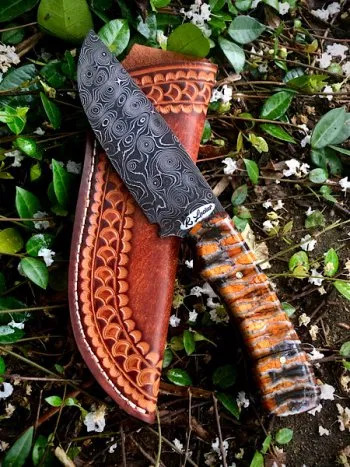
Mammoth bark is the outer crust layer of mammoth tusks, featuring more dramatic patterns and color variations than the inner core. Fossilization and geological pressure create unique colors and striking patterns. More affordable than inner core ivory. **Fordele:** More affordable than core ivory, dramatic patterns and colors, legal alternative, unique prehistoric material, conversation piece **Ulemper:** Less stable than core ivory, can be brittle, requires stabilization, natural cracks common, still expensive
Properties
✓ Pros
• Good workability
✗ Cons
• Susceptible to moisture damage, requires proper sealing • Higher cost material
Working Notes
Cutting: More forgiving than core ivory but still delicate. Sharp tools essential. Natural cracks must be worked around. Sanding: Sand carefully around natural fissures. Progress through grits to reveal colors. Stabilization helps but caution needed.
Finishing Notes
Seal thoroughly with CA glue. Oil brings out color depth. Patterns are highlight of finished piece.
⚠️ Special Considerations
Natural cracks are characteristic. Each piece has unique fossilization colors. Stabilization varies by piece quality.