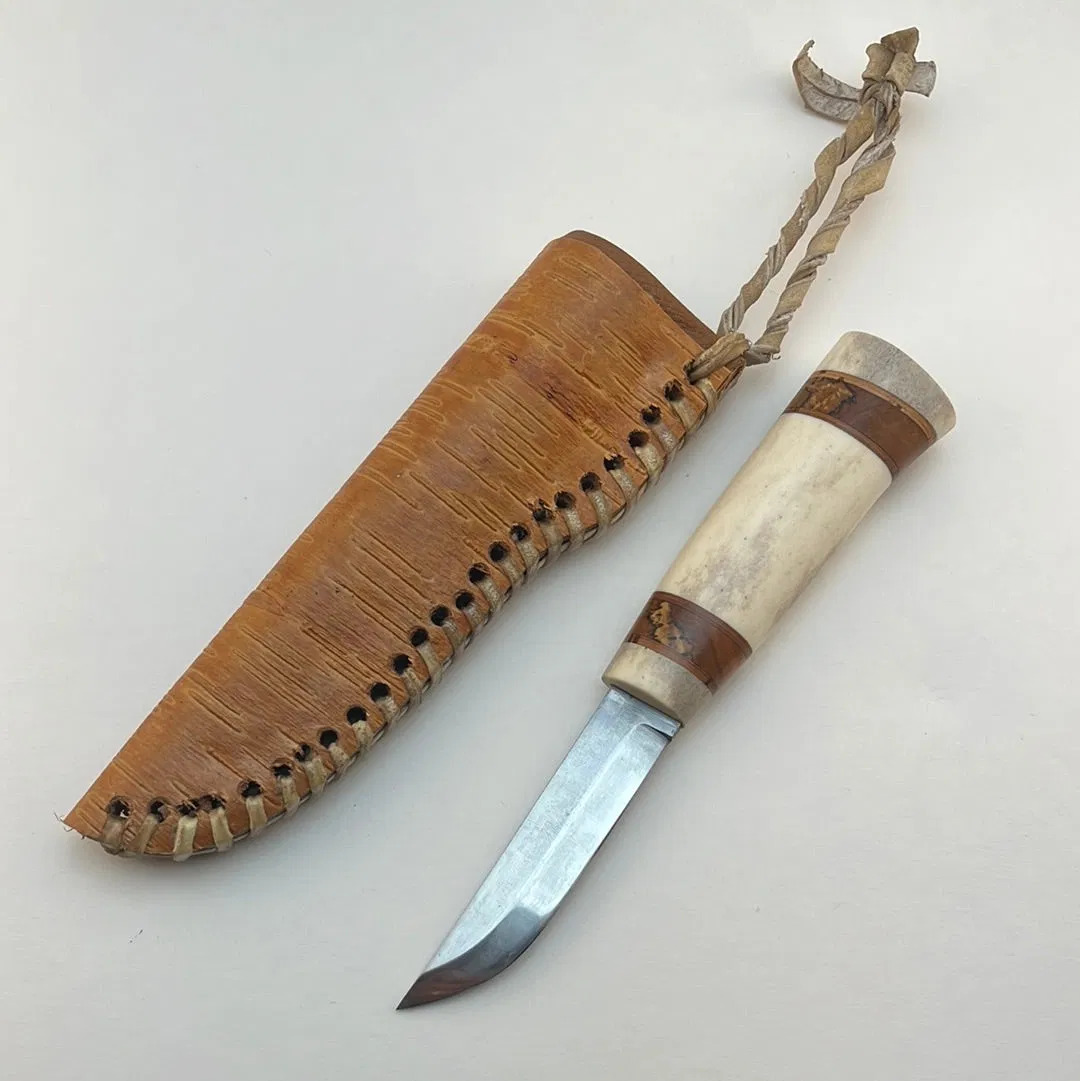
Description
Moose antler comes from the largest deer species, producing massive palmated antlers. Due to the extreme size, moose antlers have the most pith of North American antlered species. Best sections are from outer palms and points where material is denser. **Fordele:** Massive size available, unique palmated form, distinctive appearance, sustainable material, North American origin **Ulemper:** High pith content limits usable material, can be spongy in sections, variable density, requires careful selection
Properties
✓ Pros
• Good workability • Good water resistance
✗ Cons
• Requires proper care and maintenance
Working Notes
Cutting: Select outer palm edges or points for best density. Avoid pitchy centers. Sharp tools for dense sections. Sanding: Dense outer material sands like deer antler. Pitchy areas sand differently. Progress 220-600 grit.
Finishing Notes
Seal porous sections with thin CA glue. Oil enhances natural color. Dense sections polish nicely.
⚠️ Special Considerations
Most pith of any antler species. Careful section selection critical. Best material is at outer edges and tips.