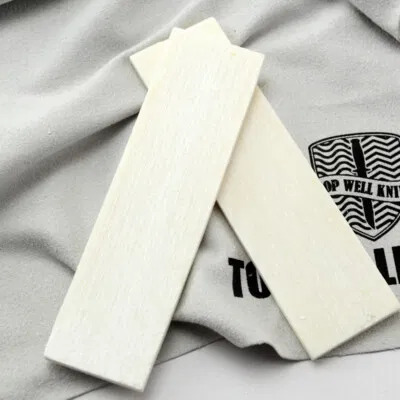
Description
Bovine bone is appreciated for its hardness, resistance, and unique texture. It's easily worked, plentiful, and fairly durable, making it a popular choice for traditional knife handles. However, bone is very porous, which means it absorbs oils and moisture from handling. **Fordele:** Inexpensive, easy to work with, takes dye very well, good for jigging (carving patterns), readily available, lightweight **Ulemper:** Very porous and absorbs moisture/oils, stains easily, less durable than synthetic materials, prone to cracking if not properly sealed
Properties
✓ Pros
• Excellent workability with both hand and power tools • Economical and readily available
✗ Cons
• Susceptible to moisture damage, requires proper sealing
Working Notes
Cutting: Use sharp carbide tools or HSS bits. Cuts easily with standard woodworking tools. Creates fine dust that should be contained. Sanding: Start with 220 grit and progress to 600+ grit. Wet sanding helps control dust. Bone dust is a respiratory irritant, so wear a mask.
Finishing Notes
Apply multiple coats of CA glue or epoxy to seal pores. Can be buffed to high polish. Oil or wax regularly to prevent drying and cracking.
⚠️ Special Considerations
Must be sealed thoroughly due to porosity. Avoid extended water exposure. Natural material means each piece varies in density and potential flaws.